








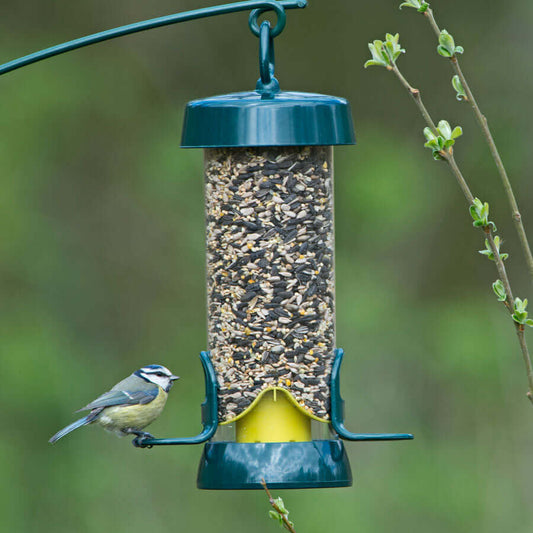
01 / Seed
Caged Seed Feeders
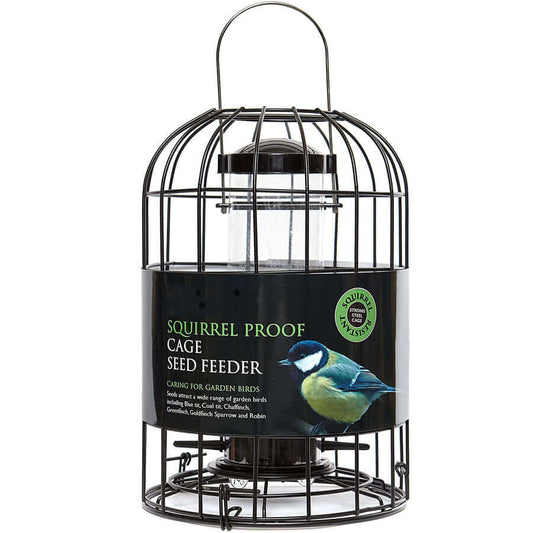
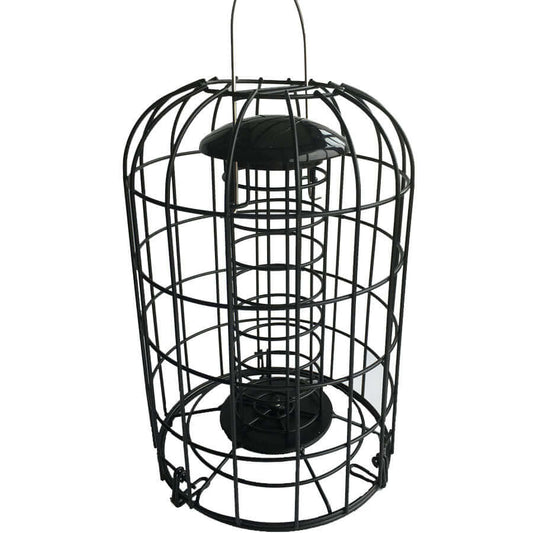
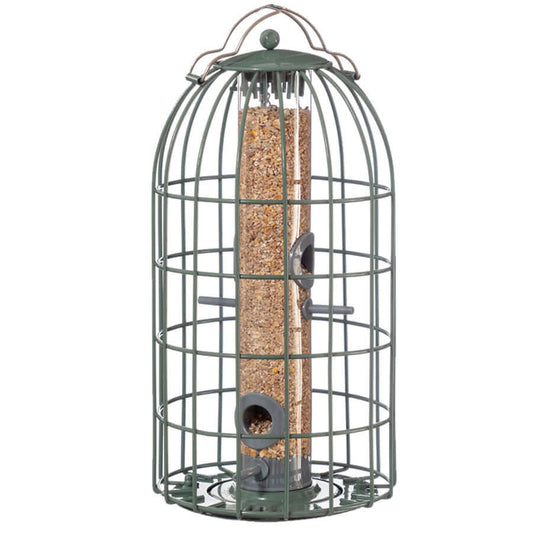
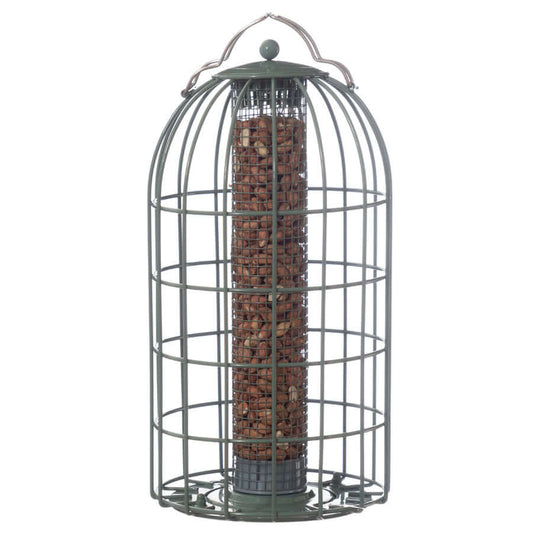
A protective outer cage can make access more difficult for squirrels while still allowing some smaller birds to reach the feeder inside.


Managing Squirrels
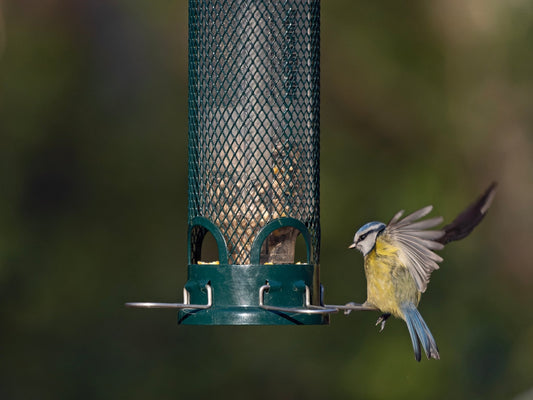
Squirrel-proof and squirrel-resistant feeders are designed to help manage access to bird food, but no single design will work in exactly the same way in every garden.
Feeder construction, position and the behaviour of individual squirrels can all affect the result, so choose a design that suits your feeding setup and be prepared to adjust it.
Choose By Feeding Style
A protective outer cage can make access more difficult for squirrels while still allowing some smaller birds to reach the feeder inside.
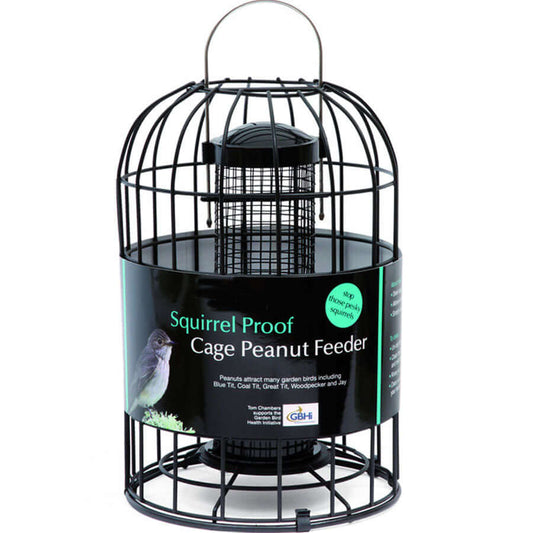
Use a squirrel-resistant peanut feeder when you want to offer whole peanuts while adding an extra barrier around the feeding area.

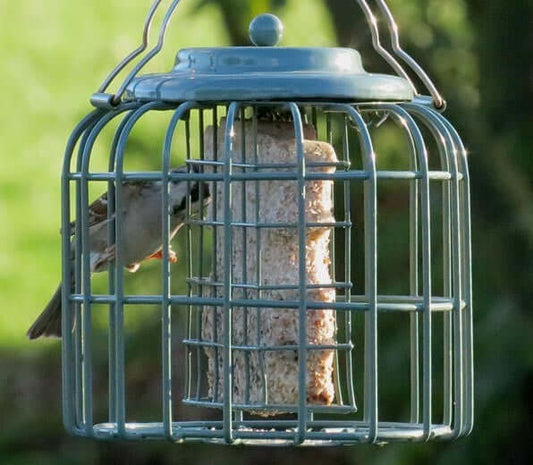
Caged designs provide another way to manage access when offering fat balls in gardens where squirrels are regular visitors.
Stronger materials and construction can be useful where squirrels regularly climb on, pull at or chew feeding equipment.
What Does Squirrel-Resistant Mean?
Squirrel-resistant designs are intended to make access more difficult or reduce the opportunity for damage.
Results vary according to feeder design, where it is positioned and how squirrels approach it. A determined squirrel may still investigate, climb on or attempt to reach the food.

Position Can Make A Difference
Nearby branches, fences, walls, posts and other structures can give squirrels routes towards a feeder.
Rather than relying on a fixed distance rule, observe how squirrels reach the feeding point and move or adjust the feeder where practical.
Food & Feeder
A squirrel-resistant design still needs to be the right feeder for what you are offering.
Choose a seed feeder for seed, a peanut feeder for whole peanuts and a fat ball feeder for fat balls, then select a squirrel-resistant version if access is becoming difficult to manage.
A Different Way To Think About It
Squirrels are part of the wildlife using many gardens. The aim of a squirrel-resistant feeder is simply to manage who can reach a particular food source.
If squirrels continue to visit, watch how they interact with the feeder and adjust the equipment or position rather than expecting one product to solve every situation.

Caged Designs
Some caged feeders are designed so smaller birds can pass through the outer cage while larger visitors find access more difficult.
That can be useful in some gardens, but the result will depend on the dimensions of the cage and the birds and animals using the feeding area.
Explore Small Bird FeedersFeed Birds Properly
Check the feeder regularly, remove damp or spoiled food and clean it whenever residue, droppings or other material begins to build up.
Allow cleaned equipment to dry before refilling and keep the surrounding feeding area well managed.
Read The Responsible Feeding GuideExplore More
Compare seed, peanut, niger, suet and other feeder styles.
Explore bird feeders →Explore feeder designs created with smaller garden birds in mind.
Explore small bird feeders →Find practical products for keeping feeding equipment and feeding areas well managed.
Explore feeder hygiene →Helpful Answers
Practical guidance on choosing and using squirrel-resistant feeding equipment.
No feeder design should be treated as a guarantee against every squirrel. Squirrel-proof and squirrel-resistant feeders are intended to make access more difficult or help reduce damage.
Both terms are commonly used for feeders intended to manage squirrel access. In practice, performance can vary according to feeder design, position and the behaviour of individual squirrels.
Caged designs may make access easier for some smaller birds and more difficult for larger visitors, but this depends on the cage dimensions and the species using your garden.
Choose a position that works for the birds and allows you to inspect, refill and clean the feeder. Observe how squirrels approach it and adjust the position where practical.
Squirrels may climb on, pull at or chew some feeders. More robust materials and caged designs can be useful where this is a recurring problem.
Yes, provided the feeder is designed for that particular food. Choose a squirrel-resistant seed feeder for seed, peanut feeder for whole peanuts or fat ball feeder for fat balls.
Clean it regularly and whenever food residue, droppings or other material begins to build up. Follow any manufacturer instructions for dismantling and cleaning the feeder.